Persimmons in Iran
Persimmons (khormaloo) are a popular autumn fruit in Iran.


Sistan and Baluchestan is the largest of Iran's thirty provinces by area. Sistan is the area to the north and Baluchestan lies to the south bordering Pakistan.

 |
| Moraq Mosaic Tiles |
This isn’t a historical building by any means. It’s just a decoration on the outer wall of the compound of an official building on Valiasr Avenue. It is, however, a nice example of the Moraq (mosaic) style of Iranian tilework in which small pieces of glazed tile are placed closely together over a previously laid-out pattern to form a decorative panel which can then be cemented to a wall.
This form of tilework reached its peak in the Timurid Period (14-15th century CE) and can be seen on monuments in Iran such as Goharshad Mosque in Mashad, (1418 CE), the Jom'eh Mosque of Yazd (1456 CE), the Jom’eh Mosque of Varamin (1322 CE) and the Khan Madreseh in Shiraz (1615 CE).
More on tiles as soon as I get some good pics!

If you love your greens and meat together then this simple Persian preparation is just the thing you need. Gently spiced and flavorful it goes well with rice or bread.
Greens
1 cup chopped parsley
1 cup fenugreek leaves (chopped)
1 cup spinach (chopped)
1 cup chives (chopped)
Rest of the Ingredients
250 grams mutton (minced)
250 grams lima beans (soaked overnight or soak two hours before on the day if you don’t like them very soft)
1 onion (grated/finely diced)
2 tbsps oil
Salt and pepper to taste
Seasoning
1 tsp dried mango powder
12 tsp turmeric
Method
Usually Iranians fry their greens in oil and keep aside but a healthier way of making the dish is to cook them without frying them.
Add salt, pepper and onion to the mince and mix well. Make small balls and fry in the oils until golden brown. Don’t make the balls very big as cooking them is easier when kept medium (lemon sized).
Remove and keep aside.
In the same oil add the greens, beans, turmeric and dried mango powder with salt to taste. After two minutes add the meat balls and allow to cook, covered and on medium heat until the water dries up and a gravy like consistency is obtained.

This is a lovely soupy concoction which is great on a rainy day or a cold wintry day. Wholesome and tasy it is a meal in itself!
Ingredients
1 can nokhod (chickpeas) or 1 cup dry nokhod (chickpeas/garbanzo)
1 cup adas (lentils)
1 cup lobiya ghermez (red beans or red kidney beans)
1/4 cup navy beans (optional)
1 pack of Reshteh (noodle)
1 medium Onion - chopped
Kashk
chopped garlic
dry mint
salt/pepper
turmeric (optional)
2 table spoons flour (optional as a thickening agent)
Sabzi (greens) for the Aash (soup) include: parsley, cilantro, spinach, green onions, shevid (dill)
Combine in the ratio (3 parsley: 2cilantro: 2 green onions: 1 spinach)
Shevid (dry dill) - approximately 4 spoonfuls
Method
Most people soak their red beans and lentils the night before but soaking them on the day of cooking, instead of overnight works best as they don’t overcook and soften. While your beans are soaking, clean and chop parsley, cilantro, spinach, and green onions. Do not over chop the greens.
Cook the aash in a very large pot. Place some water in the pot and bring it to a boil. Drain the beans (the nokhod, red beans, navy beans, and lentils) and boil in the water for about 10 - 15 minutes. Once again drain the beans and add a small amount of chopped onions (with some oil) in the pot. Add the beans back into the pot after the onions are sautéed a bit.
At this point add some turmeric powder to the beans. Next add all the fresh greens and dried shevid (dill) and some more water. Stir constantly to ensure nothing is sticking to the bottom of the pot and everything cooks evenly.
Next add some sautéed mint with lightly browned onions and garlic to the aash reshteh. Add a little cold water to the flour and mix it into a paste. This is an optional step. Then add some kashk into the pot and stir. Now let this pot cook for 3-4 hours, stirring occasionally.
The last thing to add is the reshteh. When you serve the aash, decorate with sautéed mint, onions, and garlic and some kashk.
Mariam Noronha
Tehran, Iran's capital and biggest city is choc a bloc with the colors and flavors of Persia.
Tehran's fashion conscious people, blend of the modern and traditional make it a great place to shop, eat and mingle with people. Here is a look at some shopping options you can explore on your visit to Tehran.
You can begin your shopping sojourn in Tehran with a visit to the Grand Bazaar, a must-see tourist attraction located in southern Tehran. Traditionally, this bazaar was split into several corridors, each of which was a hub for sellers specializing in different types of goods. The corridors here are over 10 kilometers in length teeming with a variety of goods such as carpets, copper, spices, and precious metals, gems, jewelry as well as small traders selling a range of goods.
There are several entrances to the Grand Bazaar some of which are locked and guarded at night. It is difficult to say exactly when the "bazaar" first appeared, but in the centuries following the introduction and spread of Islam in Persia, historians believe that trade and commerce spawned in this very location way back in time. The Grand Bazaar is a continuation of the legacy of this growth.

If you are looking for good quality products in Tehran then head to Tandis Center where you will find the best brands in almost every type of product. Home to brands like Levis, Dior, Espirit, Zolo and Zara among others this shopping center is a great place to buy textile products like the termeh, garments, scarves, trench coats, shoes, furniture and home décor products, basically whatever you need.
Tandis Center is a great place to grab a bite with its many restaurants, fast food centers and coffee shops too.
A charming place where you can window shop, soak in the atmosphere and buy everything that's colorful and interesting from fresh fruits and vegetables to home décor products and textiles.
Prices here are relative and you can bargain to strike a good deal. Everything has its own relative price, and even you can discuss the prices.
Currency and Other Related Information for Shoppers
The official currency of Iran is the Riyal. However, the currency commonly used for everyday life is called 'Toman'. 10 Riyals make 1 Toman. Be sure to check the units used for the prices.
It is important to note that Credit Cards such as Visa, MasterCard, and American Express are not widely used in Iran. Iran has its own local debit/credit system. Consult with your travel agent before traveling to Iran. Even though some hotels and traditional handicraft shops accept credit cards you cannot rely on credit cards for most transactions.
A shopping trip in Tehran as is anywhere else in Iran is an experience in itself. The bazaars are colorful and bustling with families eager to buy or simply window shop. You are sure to spot tea sellers in their colorful attire as juggle teacups in one hand while they pour the aromatic beverage with the other. The aroma of freshly baked bread is in the air as people line up at bakeries to get a freshly baked loaf of bread while others stop for a glass of sherbet or juice. A shopping trip is a great opportunity to go bazaar hopping while mingling with the local people.
Mariam Noronha
Zereshk Pulo Murgh or Persian Berry Rice is a main course item that one can rustle up with ease while adding that traditional Persian touch to a meal. Here is how simple this dish really is.


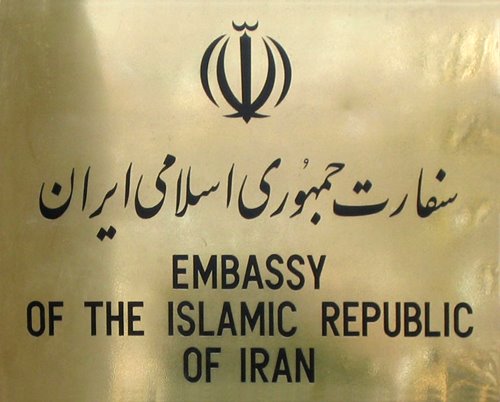
Following the latest diplomatic spat between the UK and Iran, the Iranian embassy in London and the British embassy in Tehran have both been closed.
The Iranian embassy in London reopened in February 2014 with the British embassy in Tehran reopening in August 2015.

Iranian Embassy in the United Kingdom
16 Prince's Gate
London SW7 1PT
Nearest underground station is Knightsbridge on the Piccadilly Line
Follow IranVisitor on Twitter. If you have an Iran-related Twitter account please follow IranVisitor on Twitter and we'll follow right back. We look forward to reading your tweets on Iran.


Vakil Bazaar in Shiraz is the city's main market and located in the historic heart of the old city.

The market is thought to date from the 11th century and is a good place to buy Persian carpets, ethnic clothes (as pictured), copper ornaments, and local herbs and spices. nearby are a number of mosques, bathhouses, and caravanserais.

Iran has 31 provinces or ostan each governed by a provincial governor-general. Sistan and Baluchistan is the largest Iranian province by area, slightly bigger than Kerman. Tehran is the largest by population by some distance and has the highest population density.

The provinces are further divided into counties (shahrestan), and then subdivided into districts (bakhsh) and sub-districts (dehestan).

Alborz, Ardabil, Bushehr, Chaharmahal and Bakhtiari, East Azerbaijan, West Azerbaijan, Fars, Gilan, Golestan, Hamadan, Hormozgan, Ilam, Isfahan, Kerman, Kermanshah, Khuzestan, Kohgiluyeh and Boyer-Ahmad, Kurdistan, Lorestan, Markazi, Mazandaran, North Khorasan, Razavi Khorasan, South Khorasan, Qazvin, Qom, Semnan, Sistan and Baluchestan, Tehran, Yazd, and Zanjan.

The Cyrus Cylinder, a 2,500-year-old clay artefact, has been on display recently at the National Museum of Iran in Tehran, on loan for a special exhibition from the British Museum in London.

The Cyrus Cylinder dates from King Cyrus' conquest of ancient Babylon in 539 BCE and his subsequent freeing of the subservient peoples of the city state, who had been enslaved there, including a sizeable Jewish population.
The ancient cuneiform script pronounces the rights of all religious groups to worship the god(s) of their choice.
Over 1 million people are believed to have viewed the Cyrus Cylinder while it was on display in the Iranian capital.
British Museum
Iranian Music CDs
Books on Iran
Guide to Tehran