Stained Glass In Iran
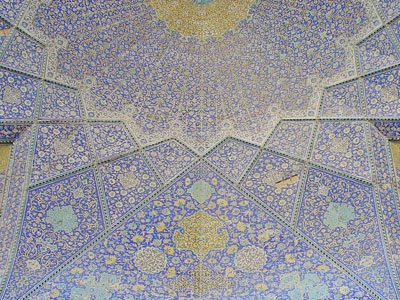
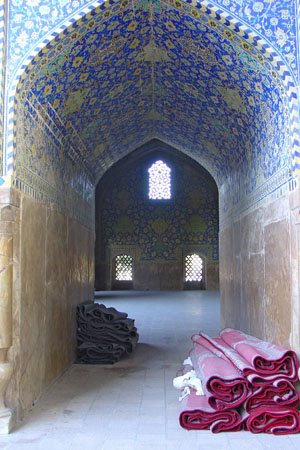
Stained glass is used in many mosques in Iran often in beautiful patterns. Shiraz is particularly well-known for its stained glass.


Sitemap - list of posts on Iran


Stained glass is used in many mosques in Iran often in beautiful patterns. Shiraz is particularly well-known for its stained glass.
Sitemap - list of posts on Iran
 |
| Moraq Mosaic Tiles |
This isn’t a historical building by any means. It’s just a decoration on the outer wall of the compound of an official building on Valiasr Avenue. It is, however, a nice example of the Moraq (mosaic) style of Iranian tilework in which small pieces of glazed tile are placed closely together over a previously laid-out pattern to form a decorative panel which can then be cemented to a wall.
This form of tilework reached its peak in the Timurid Period (14-15th century CE) and can be seen on monuments in Iran such as Goharshad Mosque in Mashad, (1418 CE), the Jom'eh Mosque of Yazd (1456 CE), the Jom’eh Mosque of Varamin (1322 CE) and the Khan Madreseh in Shiraz (1615 CE).
More on tiles as soon as I get some good pics!


The Jameh Mosque in Qazvin, west of Tehran, is a popular place to gather.
Reputedly constructed over a Zoroastrian fire temple, the historic Jameh Mosque has a blue dome and some striking interior relief calligraphy.
Qazvin is west of Tehran on the A01 highway.
There are trains and frequent buses making the two and a half hour journey to Qazvin from the capital.
© Will Yong
Known for its carpets, Qazvin is west of Tehran on the A01 highway.
The Imamzadeh Hossein shrine (below) is a shrine commemorating Hossein, a son of Imam Reza (765-818; the seventh descendant of the prophet Muhammad) and dates from the 16th century.

The shrine is known for its beautiful geometrical tiles and is set in a courtyard with a fountain.
There are trains and frequent buses making the two and a half hour journey to Qazvin from Tehran.
© Will Yong
See an image of a mosque under construction in the Iranian capital, Tehran.

Tehran has over 2,000 mosques, with estimates suggesting around 2,100 as of early 2024, though exact figures vary as some sources mention under 2,000 from earlier years. While there are many, Tehran has a lower density of mosques per person compared to other Iranian provinces, with the highest concentration found in the southern parts of the city.