Tourist & Resident Guide to Iran
Showing posts with label Image. Show all posts

Sunday, January 18, 2026

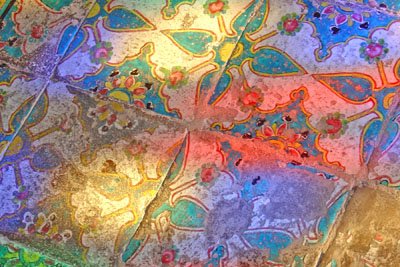
Images: Moraq Mosaic Tiles

Images: Moraq Mosaic Tiles


Moraq Mosaic Tiles.
Moraq Mosaic Tiles

This isn’t a historical building by any means. It’s just a decoration on the outer wall of the compound of an official building on Valiasr Avenue. It is, however, a nice example of the Moraq (mosaic) style of Iranian tilework in which small pieces of glazed tile are placed closely together over a previously laid-out pattern to form a decorative panel which can then be cemented to a wall.

This form of tilework reached its peak in the Timurid Period (14-15th century CE) and can be seen on monuments in Iran such as Goharshad Mosque in Mashad, (1418 CE), the Jom'eh Mosque of Yazd (1456 CE), the Jom’eh Mosque of Varamin (1322 CE) and the Khan Madreseh in Shiraz (1615 CE).

More on tiles as soon as I get some good pics!

Photographs of Iran

© Iranvisitor.com

Monday, November 22, 2010

Images of Masjid-e-Jamkaran Qom

Images of Masjid-e-Jamkaran Qom


Enjoy these photographs of Masjid-e-Jamkaran in the holy city of Qom, Iran.


The Masjid draws pilgrims from all parts of Iran as well as other countries.

Masjid-e-Jamkaran Qom Iran

The Masjid was built in the year 393 AH (1003 by the Gregorian calendar) by Hassan Bin Maslah by the order of Imam Madi (A.S), the Twelfth Imam of the Shia Isna Ashari (translated as followers of the Twelve Imams) Muslims.

Masjid-e-Jamkaran Qom Iran

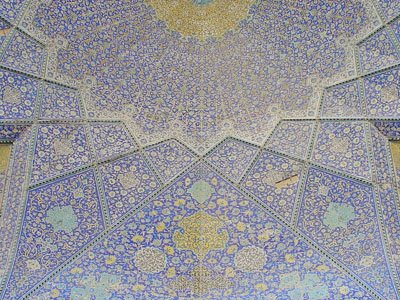
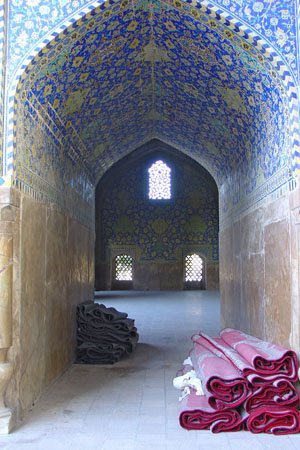
The mosque is an architectural masterpiece that celebrates Persian art in every corner.

Masjid-e-Jamkaran

The mosque is a fifteen-minute drive from Qom and the best way to reach the mosque is to take a taxi from outside the Roza-e-Masooma-e-Qum complex.


Masjid-e-Jamkaran Qom

Images by Mariam Noronha.

Guide to Tehran

© Iranvisitor.com

Friday, April 30, 2010

Iran Slideshow

Iran Slideshow

Iran Slideshow.

See a slideshow of Iran to quickly and easily navigate to a blog entry on Iran from IranVisitor


Iran


Iran Slideshow

© Iranvisitor.com

Tuesday, February 19, 2008

Taking Pictures in Tehran

Taking Pictures in Tehran


The rallies to mark the anniversary of the 1979 revolution are an uncomfortable mix of festive gaiety and political posturing.

Walking down "Revolution Street" towards "Freedom Square" there were people begging to have their photos taken. Every time I stopped to point my camera, passing groups would shout for me to look.

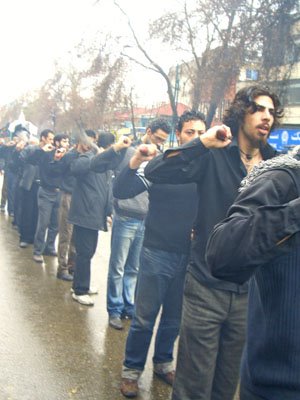
Kids in camouflage gear and pro-Palestinian check scarves puffed out their chests and waved their flags more vigorously. At one point a group of about twenty-five men all lined up neatly and patiently for me. Best of all, one middle-aged lady sitting by the side of the road looked up at me as I passed – her eyes just begging me to take her picture.

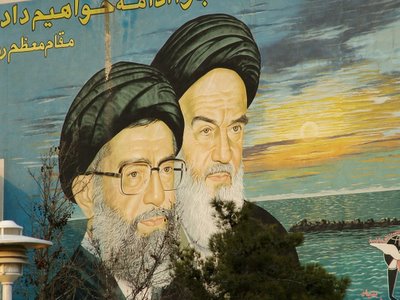
She smiled a sweet smile, beaming innocently and incongruously over a poster showing the frankly lascivious grin of Ayatollah Khamenei and a black and white "death to America" placard.
Taking pictures in Tehran, Iran
Taking Pictures in Tehran

Iran's biggest show of nationalist pride is actually one of the easiest times for a photographer (foreign or otherwise) to take people's photographs. With the whole day almost entirely devoted to showing defiance against foreign meddling, the theory is, the further this message travels the better. And since "the enemy" speaks English, it makes sense to translate the printed material.

Taking Pictures in Tehran
Tehran
The national psyche has been so long moulded by opposition and Iran's pariah status in the western world that I even sensed a degree of knowing self-parody. Chanting slogans against America, Israel and, to a lesser extent, Britain has taken on the air of a national pastime. The role of 22 Bahman (11 February) as a political as a national day of remembrance has at least been equalled by its new role as a street festival – a kind of super-politicized Carnaval. There was even a tent by the side of the road giving kids the opportunity to throw darts at a crude mockup of Uncle Sam. A geopolitical fairground game. The host was wearing a comically-tall stars and stripes top hat.

Taking Pictures in Tehran, Iran
Tehran
At any other time, taking pictures in Iran can be sensitive to say the least. And it’s hard to put your finger on why. Once I was taking a picture of bus. A normal city commuter bus. A plain clothed man, no uniform, no ID approached me and asked me if I had permission to take pictures. I said that we were in a public place and there was no need for permission. He assured me that I was wrong. After some time talking I think I got to the bottom of it. He told me that many foreigners come to Iran and take pictures of things to present Iran in an unfavourable light. I asked him what about the good things in Iran? What if foreigners want to show Iran in a good light? I had taken my picture and he was getting bored so we parted without reaching a conclusion.

Taking Pictures in Tehran


Iranian Music CDs

Guide to Tehran

© Iranvisitor.com

Friday, December 22, 2006

Iran's Azeri Turks

Iran's Azeri Turks

If you hear a language other than Farsi on the streets of Tehran, most likely it's Azeri Turkish. Closely related but not identical to the national language spoken in Turkey, Azeri is spoken as a first language by about 20% of the Iranian population, mainly concentrated in the provinces of Eastern and Western Azerbaijan but it is also very commonly spoken in the capital. Estimates of just how many Iranians are ethnically Azeri Turks vary widely. One very commonly quoted statistic makes Azeris the largest single population group in Iran, making up 30 million of the country's population of 70 million.

Iran's Azeri Turks

Turks are stereotyped by other Iranians as flashy with their wealth and Turkish women are said to be great cooks and hardworking wives but rather expensive to maintain. Sadly, Turks are also widely ridiculed as being congenitally stupid. Jokes about Turkish simpletons make up a large majority of the new jokes circulating around schoolyards, workplaces and universities. Turks are also ribbed for not being able to pronounce the Farsi letters "(ghayn)" and "(jim)".

The Islamic Republic, as well as the Imperial Government before it, has tried to play down differences between Iranians and Azeris - perhaps fearing that an awakened sense of Azeri nationalism could threaten them. The Azeri language is not taught in schools, not even as an optional second language. Ironically, many powerful members of the political establishment - including Supreme Leader Ayatollah Ali Khamenei - are themselves Azeri Turks.

Turks have also experienced more serious persecution in modern Iran. In 1981, an uprising in Tabriz was brutally put down by the new government with heavy weapons and summary executions. However, on the whole, Iranian Turks do not have a strong urge towards separatism. The vast majority consider themselves as Iranian as Farsi speakers do.

The Cartoon Controversy

The most recent clash between Turks and the government came in the summer of 2006 when a cartoon published in the Iran Daily newspaper depicted an Azeri cockroach failing in an attempt to learn the Farsi language. The inflammatory image was not taken at all lightly by Azeris who took to the streets of Azerbaijan's major cities in thousands. Newspapers were burnt and offices of the offending publication were surrounded by angry protesters. In the end, the editor of the Iran Daily was sacked and President Ahmedinejad himself travelled to the region to patch up relations. The importance of up to 30 million voters clearly made the trip worthwhile.

Travel Guide to Iran

Iran map.

© Iranvisitor.com

Sunday, November 26, 2006

Barbari Bread

Barbari Bread

barbari bread

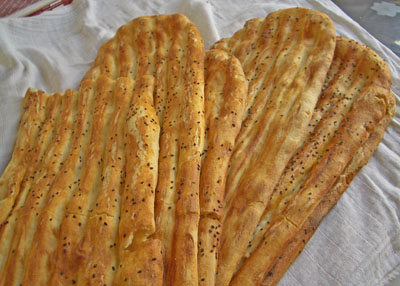
This is "naan e barbari", one of the breads that is available fresh all over Tehran and Iran. It's crisp and golden on the outside and soft and white in between the crusts. Usually quite generously salted, barbari is tasty enough to eat on its own and one of the perks of going to buy it is the right to eat it piping hot on the way home. You can see from the picture that I've helped myself to the "head" of the loaf on the left.

It's often said that no matter how hard hard up you are for cash, you can always treat yourself (and/or a friend) to "barbari o nushabe", that is, barbari bread and fizzy drinks.

Travel Guide to Iran

© Iranvisitor.com

Sunday, September 03, 2006

Images: Ancient History of Iran

Images: Ancient History of Iran


A huge variety of bric-a-brac is on display at Tehran's Jomeh Bazaar (Friday Market). Iran's last monarch and his wife are pictured here among the antiquities - very much part of the past.

Shah's coronation photos, Jomeh Bazaar

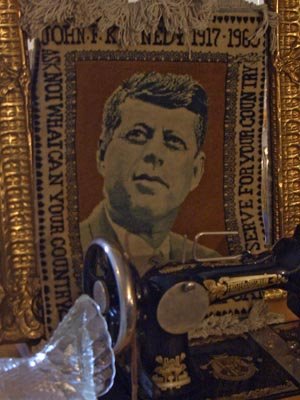
Another iconic figure of the 20th century, this time commemorated on a specially woven Persian rug.

JFK carpet

Tehran Sightseeing Guide

© Iranvisitor.com

Friday, August 04, 2006

Iran Images: Resistance Stations in Vanak Square

Iran Images: Resistance Stations in Vanak Square


At major pedestrian and traffic intersections around the city of Tehran, makeshift shelters have been set up to spread the anti-Israeli message. If there was any ambiguity about the position of the government of the Islamic Republic of Iran regarding Israel, there can be no doubt about it now - "Israel must be wiped out [sic] the world".

Resistance Station, Vanak Square

Resistance Station, San'at Square

Photographs of Iran

© Iranvisitor.com

Wednesday, August 02, 2006

Images: More Pro-Hezbollah Propaganda

Images: More Pro-Hezbollah Propaganda

The pro-Hezbollah propaganda machine goes into overdrive in Tehran.

Seyyed Hassan Nasrallah

Hassan Nasrallah pictured in the rear windscreen of a Pride hatchback.

Hassan Nasrallah

Photographs of Iran

© Iranvisitor.com
Saturday, July 29, 2006

Images: The Smiling Face Of Anti-Zionism

Images: The Smiling Face Of Anti-Zionism


anti-Zionist window sticker
Snapped on the windscreen of a bus in Northern Tehran. The avuncular Sayyed Hassan Nasrallah, Lebanese leader of Hezbollah, smiles on warmly as his men march off to war with the "illegitimate Zionist entity".

Photographs of Iran

© Iranvisitor.com

Thursday, February 16, 2006

Wednesday, January 11, 2006

Images: Tehran by Neville Powis

Images: Tehran


Photographs of Tehran in 2005 by freelance cameraman and filmmaker Neville Powis.

-Click on the image to see the larger version.


Tehran (c)Neville Powis
All Rights Reserved Neville Powis

Tehran (c)Neville Powis
All Rights Reserved Neville Powis
© Iranvisitor.com
Sunday, December 04, 2005

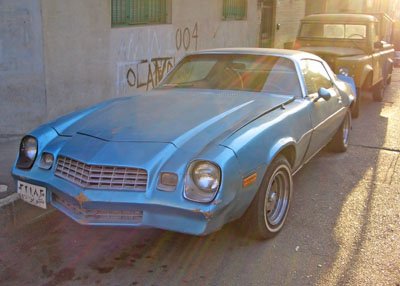
Images: American Car Relics in Tehran

Images: American Relics

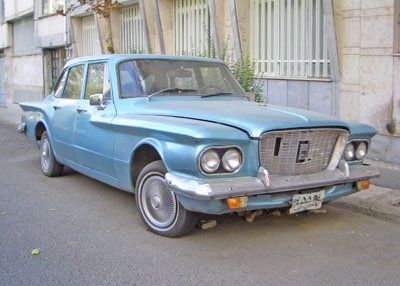
The streets of Tehran are home to a veritable museum of old American cars, though, admittedly, they are often not the best-preserved specimens.

Affectionately referred to by Tehranis as “boats” these gas-guzzling monsters are currently the target of a government trade-in scheme which helps their owners buy new cars more cheaply.

american relic

american relic

american relic

Cars in Tehran

Gasoline Smuggling

© Iranvisitor.com

Saturday, October 01, 2005

Mosque under construction Tehran

Mosque under construction Tehran

See an image of a mosque under construction in the Iranian capital, Tehran.

Mosque under construction Tehran, Iran

Tehran has over 2,000 mosques, with estimates suggesting around 2,100 as of early 2024, though exact figures vary as some sources mention under 2,000 from earlier years. While there are many, Tehran has a lower density of mosques per person compared to other Iranian provinces, with the highest concentration found in the southern parts of the city.

© Iranvisitor.com

Wednesday, September 28, 2005

“Bush I lave [sic] you”

“Bush I lave [sic] you”

Bush I Lave You
Bush I lave you

Pro-Bush graffiti spotted in the wealthy middle-class suburb of Velenjaq, Northern Tehran.

Despite the official rhetoric which demonises the US as “The Great Satan”, a significant minority of Iranians see “Uncle Bush” as a potential saviour from Iran’s current political situation.

Wealthier Iranians with access to higher education, the internet, satellite television and foreign travel often have strong pro-Western leanings but their number is dwarfed by the millions of under-educated poor who crowd the streets of southern Tehran and constitute the majority of the rural population.

Any guesses as to the lower scribble?

Tehran, Iran

© Iranvisitor.com