Stained Glass In Iran
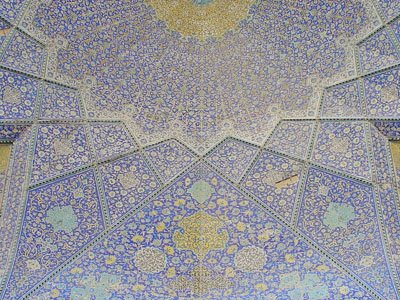
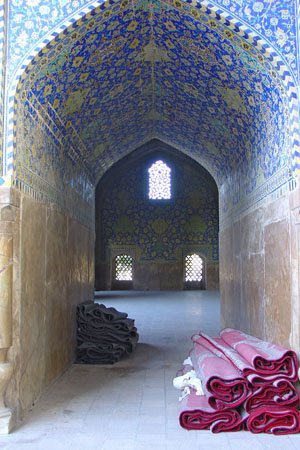
Stained glass is used in many mosques in Iran often in beautiful patterns. Shiraz is particularly well-known for its stained glass.


Sitemap - list of posts on Iran


Stained glass is used in many mosques in Iran often in beautiful patterns. Shiraz is particularly well-known for its stained glass.
Sitemap - list of posts on Iran
According to a 2004 report in the Iran Daily, Iran would have 25 million vehicles on its roads by the year 2020 up from the 2004 figure of 5.4 million. Of this number, approximately half are crammed in to the capital Tehran.
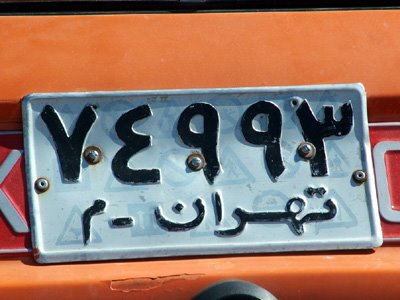 |
| Cars in Iran |
Iran has had its own car industry since the 1960s and now exports cars to a number of other countries including Russia and Belarus. Iran Khodro Industrial Group, the country's major vehicle manufacturer, hopes to export 250,000 cars to the world market by 2010, targetting such countries as Egypt, Turkey and Eastern Europe as areas of growth with plans for joint production ventures under license in such countries as China, Senegal and Syria.
Iran's first mass-produced car, the ubiquitous Paykan, based on the 1966 Hillman Hunter, was produced domestically by Iran Khodro from kits shipped by the British manufacturer Rootes. In 1978 Peugeot took over the defunct Rootes Company, and production was shifted under license to Iran, ceasing only in 2005.

The Paykan has been superseded by Iran Khodro's new model, the Samand, which is based on the Peugeot 405. Plans are underway to produce a hybrid version of the Samand under pressure from the government to reduce vehicle emissions in Iran.
Iran has a significant domestic car manufacturing industry, producing over a million vehicles annually, primarily through large state-influenced companies like Iran Khodro (IKCO) and Saipa, making it one of the world's largest automakers despite relying heavily on older designs and licensed technology from international partners like Peugeot and Renault.
Visitors can also still see old American cars from the 1970s here and there.
 |
| Moraq Mosaic Tiles |
This isn’t a historical building by any means. It’s just a decoration on the outer wall of the compound of an official building on Valiasr Avenue. It is, however, a nice example of the Moraq (mosaic) style of Iranian tilework in which small pieces of glazed tile are placed closely together over a previously laid-out pattern to form a decorative panel which can then be cemented to a wall.
This form of tilework reached its peak in the Timurid Period (14-15th century CE) and can be seen on monuments in Iran such as Goharshad Mosque in Mashad, (1418 CE), the Jom'eh Mosque of Yazd (1456 CE), the Jom’eh Mosque of Varamin (1322 CE) and the Khan Madreseh in Shiraz (1615 CE).
More on tiles as soon as I get some good pics!
Vakil Bazaar in Shiraz is the city's main market and located in the historic heart of the old city.

The market is thought to date from the 11th century and is a good place to buy Persian carpets, ethnic clothes (as pictured), copper ornaments, and local herbs and spices. nearby are a number of mosques, bathhouses, and caravanserais.

By Arthur Upham Pope
With the history of Persia as long as the history of mankind itself, it is no surprise that its architectural legacy should be one of the richest in the world.
It is perhaps only the relative inaccessibility of Iran's architectural treasures in recent years that has caused Persian architecture to be less well regarded in comparison with that of other great civilisations. However, what is clear from the rich yet concise tour offered by Arthur Pope's "Introducing Persian Architecture", is that Persian architecture can be compared to that of Ancient Greece and Egypt without any hint of inferiority.From the ziggurat of Chogha Zambil, through to the noble ruins of the pre-Islamic Persian Empire and all the way up to the mosques and palaces of Isfahan and Shiraz, Pope cuts a great sweep through 3,000 years of history without losing his focus on the finer points of construction and ornamentation that made up his life's work.
It is in itself an achievement for such a learned and passionate scholar to condense his knowledge in a volume so well-organised and accessible for the newcomer. Numerous plates, including full colour photographs and architectural plans are conveniently cross-referenced with the text throughout the book.
Now more than 35 years old, "Introducing Persian Architecture" remains one of the best companions one could possibly have on an architectural tour of Iran. For even a short visit to Isfahan and Shiraz the cost and effort of obtaining a copy would be repaid many times over. Having picked an almost mint copy of the 1976 edition in a dusty Tehran bookshop for next to nothing, it seems likely that second-hand copies are widely available.
Introducing Persian Architecture
By Arthur Upham Pope
 |
| Shrine of Hafez |