Tourist & Resident Guide to Iran
Showing posts with label Car. Show all posts

Tuesday, January 20, 2026

Cars in Iran

Cars in Iran

According to a 2004 report in the Iran Daily, Iran would have 25 million vehicles on its roads by the year 2020 up from the 2004 figure of 5.4 million. Of this number, approximately half are crammed in to the capital Tehran.
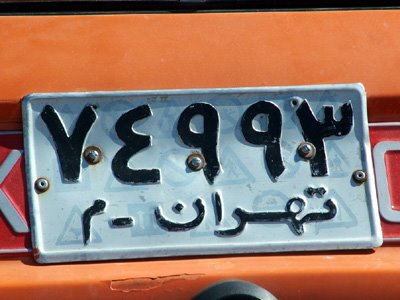
Iran License Plate
Cars in Iran

Iran has had its own car industry since the 1960s and now exports cars to a number of other countries including Russia and Belarus. Iran Khodro Industrial Group, the country's major vehicle manufacturer, hopes to export 250,000 cars to the world market by 2010, targetting such countries as Egypt, Turkey and Eastern Europe as areas of growth with plans for joint production ventures under license in such countries as China, Senegal and Syria.

Iran's first mass-produced car, the ubiquitous Paykan, based on the 1966 Hillman Hunter, was produced domestically by Iran Khodro from kits shipped by the British manufacturer Rootes. In 1978 Peugeot took over the defunct Rootes Company, and production was shifted under license to Iran, ceasing only in 2005.

Car on a building.

The Paykan has been superseded by Iran Khodro's new model, the Samand, which is based on the Peugeot 405. Plans are underway to produce a hybrid version of the Samand under pressure from the government to reduce vehicle emissions in Iran.

Iran has a significant domestic car manufacturing industry, producing over a million vehicles annually, primarily through large state-influenced companies like Iran Khodro (IKCO) and Saipa, making it one of the world's largest automakers despite relying heavily on older designs and licensed technology from international partners like Peugeot and Renault.

Visitors can also still see old American cars from the 1970s here and there.

© Iranvisitor.com

Sunday, January 14, 2007

Iran News 1/14/07

Iran News

The BBC has three stories on Iran this week.

The first details the effects of traffic and new construction on the historic city of Isfahan.

Iran News 1/14/07

The cheap price of oil and the effects of pollution from cars leads to thousands of deaths in Tehran from smog every year.

Lack of job opportunities is leading to an estimated brain drain of 150,000 people each year leaving Iran.

The Iran Daily highlights "Clean Air Week in Tehran" to combat the threat of car pollution.

The Fars News Agency reports that the Iranian government has passed into law a regulation raising the voting age in local elections from 15 to 18.

Travel Guide to Tehran

Travel Guide to Esfahan

Iran map.

© Iranvisitor.com

Monday, August 21, 2006

Iran's Fuel Leak Naghadeh

Iran’s Fuel Leak Naghadeh


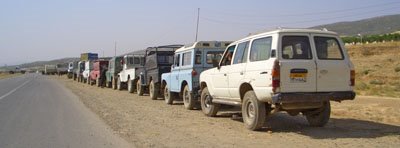
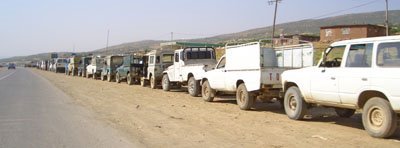
gasoline queue, Naghadeh

The twelve-pump state-owned filling station in Tehran’s Velenjak suburb had never seen a queue like this. Though constantly and doggedly jammed with an irreconcilable jumble of aging Paykan taxis, family-owned Kia Prides and sleek German status-mobiles, there is never more than a 20-minute wait.

But here in Naghadeh, West Azerbaijan, it was nearly a kilometre before any indication of the petrol station could be seen above the roofs of the jeeps and pickups that filed motionless down the dusty highway. There was, however, no sign of unrest. The drivers, resigned to spending the day here, either slept or chatted and shared tea and melons in the shade.

The complete absence of regular city cars at this local filling station told the whole story. Naghadeh, situated southwest of salt-infused Lake Urumieh, is a prime filling point for gasoline smugglers. The nearby border with Iraq has become porous since US forces handed control over to Iraq's own forces four months ago. All of these sturdy, hard-working vehicles will take their full tanks west into Iraq and then finally to Turkey where petrol prices are ten to fifteen times more expensive than at Iranian pumps.

No greater irony can exist in oil-rich Iran than a shortage of petrol. Iran consumes 70 million litres of petrol per day while its refineries produce only 40 million – making Iran a net importer of petrol despite having the world’s third largest oil reserves.

The causes are well-known and endemic. Government subsidies keep pump prices down to as low as 800 Rials ($0.09) per litre which encourages wasteful consumption and provides an incentive for smugglers.

Government plans to curb this problem through rationing have been shelved due to the absence of a framework to track consumption and the general public’s heavy over-reliance on private cars and taxis. Indeed it is hard to imagine car-clogged Tehran taking rationing or a hike in petrol prices lying down.

Shortages, intolerable waits and empty pumps have motivated Naghadeh residents to pre-empt the national government in taking action. They have forced local lawmakers to accept a rationing system of their own design. Computer systems which track the registration numbers of vehicles coming to local pumps have been supplied and programmed entirely at the expense of private citizens. Motorists are now limited to one full tank every three days. Since most smugglers try to make one trip per day, this measure is set to cut queues significantly.

Nevertheless, this local measure is unlikely to be a precursor to any national efforts. While oil revenues continue to be buoyed by soaring prices, Iran will not be forced to take any painful measures to ease its dependence on imported petrol. For the meantime at least, it can afford to feed its unhealthy addiction by providing the rest of the world with the raw materials to feed their own.

Guide to Tehran

© Iranvisitor.com

Sunday, December 04, 2005

Images: American Car Relics in Tehran

Images: American Relics

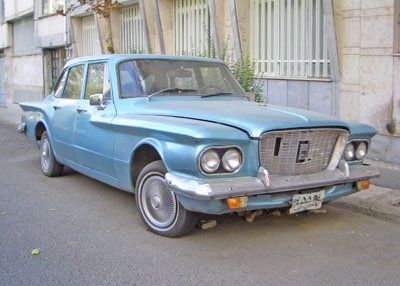
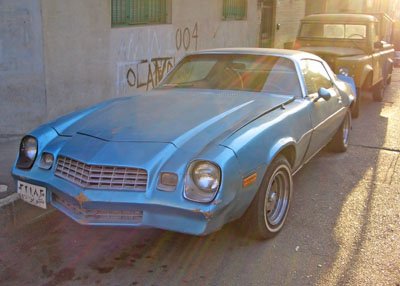
The streets of Tehran are home to a veritable museum of old American cars, though, admittedly, they are often not the best-preserved specimens.

Affectionately referred to by Tehranis as “boats” these gas-guzzling monsters are currently the target of a government trade-in scheme which helps their owners buy new cars more cheaply.

american relic

american relic

american relic

Cars in Tehran

Gasoline Smuggling

© Iranvisitor.com

Saturday, October 01, 2005

The Tehran Taxi Pool

The Tehran Taxi Pool

Taxis in Tehran.

With car pools now being hailed as the answer to urban traffic problems the world over some credit must be given to Iran's already long-established system of taxi-sharing.

The key difference between a private cab and a shared taxi is that complete strangers who happen to be going the same way will jump in with you. Drivers position themselves at bus stops and other major junctions and either call out a destination of their own choosing or be open to suggestions from a largely fixed set of popular nearby locations. Some travelers simply choose a strategic point on a main road and call out to passing cars – chances are one or more of them will be a shared cab.

It might be that you have to take more than one shared cab and walk a little to reach your destination but, at a fraction of the cost of a private cab, the shared taxi is a cost effective and efficient mode of transport between Tehran's major centres and a lesson waiting to be learned by the West.

Cars in Tehran

Guide to Tehran

© Iranvisitor.com

Blood On The Tracks in Tehran

Blood On The Tracks

Slaughtering a sheep
To mark the purchase of a new Toyota Camry, this poor creature had its blood spilled in a private car park in Qazvin.

Having slit its throat with practiced ease the slaughterer dipped his hands in the blood and daubed all four of the car’s tyres while uttering blessings.

However gruesome this may seem, the death of this lamb was not in vain.

Meat from the animal was to be given to the local poor as part of the celebrations for the birthday of the 12th Shiite Imam – the Imam Mahdi, set to return to the world when he is most needed.

© Iranvisitor.com

Wednesday, August 31, 2005

Road Deaths In Iran

Startling Facts about Iran Part II


According to IRNA (Islamic Republic News Agency) Iran ranks first in the world in numbers of road accidents. 2004 figures reported 38,000 deaths and injuries caused by traffic accidents - making it the largest cause of death in the country.

Startling Facts about Iran Part II


© Iranvisitor.com