Tourist & Resident Guide to Iran
Showing posts with label Tehran. Show all posts

Tuesday, February 17, 2026

Parsi Cola in Iran

Parsi Cola

Parsi Cola

The name "Pars" is an expression of Iranian national pride which goes a long way back in history. The province of "Pars" (now "Fars", capital Shiraz) was the centre of Iranian civilization during the time of Cyrus the Great. The name "Persepolis" comes from the Greek rendering, "Persis". The name of Iran's language, "Farsi", also derives from the same - the change to "F" came after the Arab invasion and reflects the lack of a "P" sound in Arabic.

Now, "Pars Online" is Iran's number one internet provider - one arm of the business empire of former President Akbar Hashemi Rafsanjani no less. The "Peugot Pars" is an automobile based on the old Peugeot 405 which is assembled in Iran. Parsa is a popular boys' name, Parisa for girls, and Parsi Cola is a home grown soft drinks brand which still does the rounds in reusable bottles all over the country.

Parsi Cola is an Iranian soft drink manufactured by Sasan, the regional bottler of Pepsi that also produces local brands Orange Shad Noosh and Lemon Shad Noosh. The beverage enjoys popularity in several parts of the Middle East. The drink is the primary rival to Zamzam Cola within Iran itself.

Zamzam Cola.

Iranian Music CDs

Guide to Tehran

© Iranvisitor.com

Tuesday, January 20, 2026

Cars in Iran

Cars in Iran

According to a 2004 report in the Iran Daily, Iran would have 25 million vehicles on its roads by the year 2020 up from the 2004 figure of 5.4 million. Of this number, approximately half are crammed in to the capital Tehran.

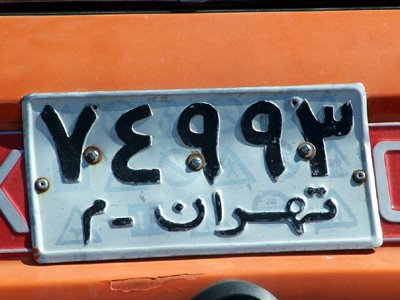
Iran License Plate
Cars in Iran

Iran has had its own car industry since the 1960s and now exports cars to a number of other countries including Russia and Belarus. Iran Khodro Industrial Group, the country's major vehicle manufacturer, hopes to export 250,000 cars to the world market by 2010, targetting such countries as Egypt, Turkey and Eastern Europe as areas of growth with plans for joint production ventures under license in such countries as China, Senegal and Syria.

Iran's first mass-produced car, the ubiquitous Paykan, based on the 1966 Hillman Hunter, was produced domestically by Iran Khodro from kits shipped by the British manufacturer Rootes. In 1978 Peugeot took over the defunct Rootes Company, and production was shifted under license to Iran, ceasing only in 2005.

Car on a building.

The Paykan has been superseded by Iran Khodro's new model, the Samand, which is based on the Peugeot 405. Plans are underway to produce a hybrid version of the Samand under pressure from the government to reduce vehicle emissions in Iran.

Iran has a significant domestic car manufacturing industry, producing over a million vehicles annually, primarily through large state-influenced companies like Iran Khodro (IKCO) and Saipa, making it one of the world's largest automakers despite relying heavily on older designs and licensed technology from international partners like Peugeot and Renault.

Visitors can also still see old American cars from the 1970s here and there.

© Iranvisitor.com

Saturday, March 30, 2013

Alam in Ashura

Alam in Ashura


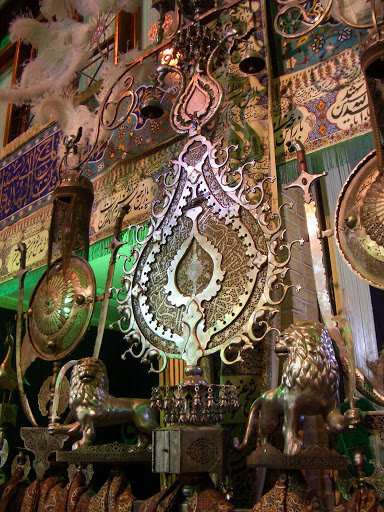
An "alam" is a heavy ritual cross which is carried during the Ashura festival. The word "alam" means "flag" or "sign" in Arabic.

Ashura is a Muslim festival and commemorates the martyrdom of Husayn ibn Ali, the grandson of Muhammad, killed at the Battle of Karbala in Iraq in 680 CE. The festival is of particular significance to Shias.

Alam carried during the Ashura Festival


Above you can see a teenage boy carrying the heavy alam in an act of self-mortification for the festival of Ashura in Tehran. Ashura is marked by such acts of mourning and grief with participants often beating themselves on the chest or using chains to flagellate themselves to express their sorrow and loss.

Alam a heavy ritual cross


Iranian Music CDs Books on Iran Guide to Tehran

© Iranvisitor.com

Sunday, April 29, 2012

Shopping in Tehran

Shopping in Tehran

Tehran, Iran's capital and biggest city is choc a bloc with the colors and flavors of Persia.

Tehran's fashion conscious people, blend of the modern and traditional make it a great place to shop, eat and mingle with people. Here is a look at some shopping options you can explore on your visit to Tehran.

The Grand Bazaar

You can begin your shopping sojourn in Tehran with a visit to the Grand Bazaar, a must-see tourist attraction located in southern Tehran. Traditionally, this bazaar was split into several corridors, each of which was a hub for sellers specializing in different types of goods. The corridors here are over 10 kilometers in length teeming with a variety of goods such as carpets, copper, spices, and precious metals, gems, jewelry as well as small traders selling a range of goods.

There are several entrances to the Grand Bazaar some of which are locked and guarded at night. It is difficult to say exactly when the "bazaar" first appeared, but in the centuries following the introduction and spread of Islam in Persia, historians believe that trade and commerce spawned in this very location way back in time. The Grand Bazaar is a continuation of the legacy of this growth.

Tehran Bazaar

Tandis Center

If you are looking for good quality products in Tehran then head to Tandis Center where you will find the best brands in almost every type of product. Home to brands like Levis, Dior, Espirit, Zolo and Zara among others this shopping center is a great place to buy textile products like the termeh, garments, scarves, trench coats, shoes, furniture and home décor products, basically whatever you need.

Tandis Center is a great place to grab a bite with its many restaurants, fast food centers and coffee shops too.

Tajrish Bazaar

A charming place where you can window shop, soak in the atmosphere and buy everything that's colorful and interesting from fresh fruits and vegetables to home décor products and textiles.

Prices here are relative and you can bargain to strike a good deal. Everything has its own relative price, and even you can discuss the prices.

Currency and Other Related Information for Shoppers

The official currency of Iran is the Riyal. However, the currency commonly used for everyday life is called 'Toman'. 10 Riyals make 1 Toman. Be sure to check the units used for the prices.

It is important to note that Credit Cards such as Visa, MasterCard, and American Express are not widely used in Iran. Iran has its own local debit/credit system. Consult with your travel agent before traveling to Iran. Even though some hotels and traditional handicraft shops accept credit cards you cannot rely on credit cards for most transactions.

A shopping trip in Tehran as is anywhere else in Iran is an experience in itself. The bazaars are colorful and bustling with families eager to buy or simply window shop. You are sure to spot tea sellers in their colorful attire as juggle teacups in one hand while they pour the aromatic beverage with the other. The aroma of freshly baked bread is in the air as people line up at bakeries to get a freshly baked loaf of bread while others stop for a glass of sherbet or juice. A shopping trip is a great opportunity to go bazaar hopping while mingling with the local people.

Map of Tehran

Mariam Noronha

© Iranvisitor.com

Monday, November 07, 2011

Calling Iran from abroad

Calling Iran from abroad


You can easily call Iran from the United States from your mobile phone or by using international phone cards. Here are the codes you need to use:
- 011 – use this code first for all international calls from the US
- 98 – dial the country code for Iran
- Area code – dial the 2-3 digit area code; for example, the area code for Tehran is 21, while for Shiraz is 711
- Phone number – now insert your phone number, made out of 7 or 8 digits.

Telephone Iran


For making international calls to cell phones in Iran, use the following sequence:
- 011 + 98 + 9XX XXX XXXX

© Iranvisitor.com

Tuesday, May 31, 2011

Iran's Post Office

Iran's Post Office

Iran’s post office is easily recognized with its yellow logo on a blue background. Iran's postal service is being privatized, though the post office will still be responsible for mail delivery.

Post Office, Vali-Asr Square

Iranian addresses are supposed to have a 10-digit postcode. Ordinary letters up to 250g cost from 30,000 to 70,000 rial (2011 prices) to send overseas depending on the zone.

Iran Post

© Iranvisitor.com

Sunday, April 24, 2011

Cyrus Cylinder

Cyrus Cylinder

The Cyrus Cylinder, a 2,500-year-old clay artefact, has been on display recently at the National Museum of Iran in Tehran, on loan for a special exhibition from the British Museum in London.

Cyrus Cylinder

The Cyrus Cylinder dates from King Cyrus' conquest of ancient Babylon in 539 BCE and his subsequent freeing of the subservient peoples of the city state, who had been enslaved there, including a sizeable Jewish population.

The ancient cuneiform script pronounces the rights of all religious groups to worship the god(s) of their choice.

Over 1 million people are believed to have viewed the Cyrus Cylinder while it was on display in the Iranian capital.

British Museum

Iranian Music CDs
Books on Iran
Guide to Tehran

© Iranvisitor.com

Saturday, January 29, 2011

Mehrabad International Airport Arrivals & Departures

Mehrabad International Airport


Mehrabad International Airport is no longer Tehran's major international airport. This is now Imam Khomeini International Airport (IKA). Mehrabad Airport in downtown Tehran, remains as the main domestic flight hub.

Mehrabad International Airport


Iran Air, Iran Air Tours, Mehan Airlines, Kish Air and Iran Aseman are some of the major Iranian airlines flying into and out of Mehrabad Airport (THR).

Iran Air has flights to Ahvaz, Ardabil, Bandar Abbas, Birjand, Bushehr, Gheshm, Isfahan, Kermanshah, Kish Island, Lar, Mashhad, Rasht, Shahre-Kord, Sary, Shiraz, Tabriz, Urmia, Yazd and Zahedan.

Departures

Arrivals

Saturday, December 25, 2010

Ice Pack Tehran

Ice Pack Tehran


Ice Pack is an extremely popular chain store selling ice-cream products, donuts, snacks and hot and cold drinks. Ice Pack was founded by Babak Bakhtiari and began life in Niavaran in Tehran and now has over 200 stores across Iran with franchises in Iraq, the Emirates, Malaysia, Kuwait, Syria, Thailand, UK, Venezuela and Turkey.


Ice Pack
No. 249, next to Saderat Bank, opposite Ettehad St., after Tehranpars intersection, Damavand Ave., Tehran, Iran.
Tel: +98 (21) 77341842

Ice Pack Tehran


Iranian Music CDs Guide to Tehran

© Iranvisitor.com

Friday, February 12, 2010

Imam Khomeini Airport Arrivals & Departures

Imam Khomeini Airport Arrivals & Departures

Imam Khomeini Airport (IKA), Tehran
IKA opened in 2004 and now almost all international flights have been transferred here from the old Mehrabad Airport in downtown Tehran, which still is the main domestic flight hub.

Aeroflot, Ariana, Emirates, Etihad, Gulf Air, Lufthansa, Qatar Airways and Turkish Airways are some of the major international airlines flying into IKA.

IKA is situated about 30km south of Tehran on the highway to Qom. With no public transport system yet in place, the only way to get there is by private taxi (120,000 Rials+, 1hr, Tel.: 021 88738855)

There are banks in the airport to change your currency into rials.

Departures

Arrivals


Iranian Music CDs Books on Iran Guide to Tehran

© Iranvisitor.com

Sunday, January 31, 2010

Baseej (Basij) Militia

Baseej

The Baseej or Basij means "Mobilization" and is volunteer militia founded by Ayatollah Khomeini in 1979.

Baseej

Their numbers are open to debate and range from around 400,000 to over a million strong. The Baseej have a presence in most large Iranian cities and towns. Becoming a member of the paramilitary force allows for various state benefits including exemption from military service and possibly a guaranteed spot at a college or university.

Iranian Music CDs Books on Iran Guide to Tehran

© Iranvisitor.com

Wednesday, September 30, 2009

Iranian Weddings

Iranian Weddings

Marriages in Iran consist of two parts: Aghd - the civil registration of a union and Jashn-e Aroosi the celebratory nuptials of the wedding reception and party.

Iranian Weddings

As in other countries, the wedding car is decorated with flowers as the couple drive off to their new life.

Iranian Music CDs

Guide to Tehran

© Iranvisitor.com

Saturday, July 18, 2009

Tehran Weather

Tehran Weather

July and August are the hottest months in Tehran with temperatures reaching 40 degrees Centigrade.

TEHRAN WEATHER

The weather in Tehran is very dry at this time with little rainfall.

Tehran Weather

Tehran Weather.

Guide to Tehran

Isfahan Weather

© Iranvisitor.com

Saturday, June 20, 2009

University of Tehran

The University of Tehran

The University of Tehran is the leading university in Iran and one of the top universities in the Middle East. Founded in 1934, the University of Tehran has twenty faculties, with around 32,000 students and 1500 teaching staff.

The student body has a majority of female students and over 300 students from overseas.

The main campus is situated south of Laleh Park east of the north south Kargar Avenue. Since the Islamic Revolution of 1979, the University of Tehran has been the site of Tehran's Friday prayers.

University of Tehran

Image by Zereshk

University of Tehran (www.ut.ac.ir/en English page)
Central Administration of University of Tehran
16 Azar Street
Enghelab Ave
Tehran
Iran
Tel: 9821 61113358

Iranian Music CDs

Guide to Tehran

© Iranvisitor.com

Thursday, June 18, 2009

Map of Tehran

Map of Tehran

Valiasr Avenue is a main north-south road in central Tehran. Tehran University is west of Valiasr Avenue with Amir Kabir University to the east. The main subway station on Valiasr Avenue is Majlis where it intersects Imam Khomeini Street. Tir Square is to the north west.


Iranian Music CDs

Guide to Tehran

Tehran

Map of Iran

Iran map.

© Iranvisitor.com

Monday, February 02, 2009

Hosein Kaffash

I

The street was already clear from yesterday’s snow though patches still reflected luminous white from the bare earth of the mountainside. The brushes, tins, knives and rubber heels in Hosein’s wooden cart rattled as its wheels stuttered over the gravel left behind from the salt trucks. A Peykan taxi trundled past in low gear, pulling its thick steel carcass up the hill without complaint like a passive mule. Snow had again not been forthcoming this year, the extended autumn was proving as dry and bright as the summer. Though his grandfather’s orchard in the north had been sold long ago, out of habit, Hosein wondered whether the mild winter would snap suddenly and decisively like the year before and throttle the unripe fruit of the orange trees.
Up ahead, a four-wheel drive attempted a handbrake turn but could only manage a disappointing two metre skid, grinding the gravel into the unrelenting asphalt with a scrape. The gleaming hulk sped away and Hosein could again hear the rattle which attended the wheels of his hand-built cart. He neared the corner where the street turned back on itself and climbed further up the mountainside. He stopped and felt a breeze, chilled by the snowy peaks above, waft down and touch the light sweat on his forehead. He closed his eyes, breathed, and frigid air stung a little on the inside of his sinuses. “Allah-e Shokr”, he whispered to himself, moved by the alternate sensations of heat from the pale winter sunlight and the ripples of cold in the air.
On the last Friday of every month, Hosein the Kaffash brought his work up to this pleasant part of town, perched high on the Tochal foothills, detached from the polluted inner-city air. The neighbourhood knew him well enough by now for many of the residents of the forty or so low-rise apartment buildings to keep any shoes in need of repair at home, anticipating his next visit, rather than carry them to Tajrish Square where two other cobblers plied their trade on the steps by the bank.
Hosein turned and saw that his son had fallen some way behind. “Ali-jaan, come to daddy, come on!” At his father’s call Ali broke into a staccato run. Thick layers of clothing under his puffer jacket made it difficult for his arms to swing and he held them out stiffly to his sides, the yellow woollen bobble on his winter hat bounced with each tiny stride. Now nearly seven years old, Ali was old enough to accompany his father on his Friday rounds, a convenience which gave father and son their only prolonged contact during the week and Mariam some respite at home, though for this Hosein sacrificed his day of rest.
Hosein the kaffash knelt down in front of his son from whose mouth steam-laden breath was pumping out in short gusts. His wide, pebble-black eyes blinked twice and opened to their widest and the boy smiled as Hosein pulled off his hat, dried off his hot brow with a gloved hand and ruffled his son’s matted hair.

Hosein Kaffash

II

Ali stood mutely observing a mean-looking black and white tomcat while his father climbed the steps of another of the three-storey blocks. The cat pleaded at regular intervals with a persistent howl issuing from the depths of unfulfilled hunger and lust. A middle-aged woman with no headscarf appeared at a second floor window to toss down a plastic bag of chicken bones. The bones half spilled onto the paving stones and the sound of the mesh screen sliding shut scratched the prevailing hush. Hosein rang the first floor buzzer and could hear the cat pawing at the plastic bag for a few seconds before the click of the intercom and a woman’s voice.
“Yes?”
“Good morning miss, I’m the kaffash. If you have any shoes to shine or repairs for me I’m at your service.”
“Oh, I see…. Let me ask my husband… Mehrdad!”
Another click and the intercom fell silent. Hosein rang the second and third floor buzzers but no answer came to disturb the greedy, hollow sound of the cat’s hard teeth on bare bones. Hosein shifted his cart into a bright triangle which the sun threw over the steps up to the entrance. From it he withdrew a tattered square of coarsely woven stuff cut from the thick material of a motorcycle saddlebag which he placed on the first step where he would sit. A man he recognised from previous visits emerged wearing a long overcoat over a casual t-shirt carrying a pair of black leather shoes in one hand.
“Salaam Agha, I’m sorry but it’s just these today. You repaired them the last time you were here, may your hands not hurt! If you could just shine them for me and leave them inside the front door when you finish.”
He handed the shoes down from his place on the landing and opened his wallet. He drew out a crisp two thousand toman note and both men’s eyes held the folded blue rectangle for a shared moment from opposite sides of a great divide.
“It has no value, I’m at your service.” Hosein offered his ta’arof, the ritual refusal to be payed, but the money was already in his hand. The shoes had lost little of the shine that Hosein himself had put on them a month before and with every stroke of his brush he fought off the sense that he was in league with the mendicant accordian players and street sweepers who rang the same doorbells for small change. His eyes narrowed on the smudged outline of his own face which was beginning to emerge on the shoe in his blackened hand.
The door of the next block opened and an amply-proportioned female form emerged, draped in a pale grey floral print chador. She edged sideways to plant her feet on the first step, directly opposite where Hosein was sitting, one hand holding the moulded concrete bannister and the other cradling a tray against her bosom.
“Ali, go and help the lady. Quick!”
Without a word, the boy ran to the bottom of the steps, slipping and saving himself from a fall with both his hands. He beat his gloves free of the still fresh snow.
“Careful now, Ali.” Hosein observed the handover with as much care as the woman and young Ali executed it. “May your hands not hurt, you’ve made so much effort, thank you ma’am. Say thank you Ali,” to which Ali responded with a straightforward, “merci.”
“Oh, it’s nothing, I’m so ashamed,” the woman replied with a self-deprecating chuckle. She had a round face and a turned up nose. With her arms concealed under her grey chador she looked comically like an owl. “I’ll ask my grandson if he has any work for you,” she said.
Calling on Imam Ali for strength, the old woman hauled herself back up the steps with the same determined effort with which she had descended. Hosein rested the tray on his wooden cart and as father and son shared the unfamiliar tasting food, the relentless mewing of the vagrant black and white cat began once again. Hosein tossed him a scrap which did nothing to silence him.

© William Yong, 2009

Friday, January 09, 2009

Ashura 2009

Ashura 2009

Ashura 2009, Iran.

© Iranvisitor.com & William Yong

Short Cuts: Ta'arof

Short Cuts: Ta'arof

The two men ordered their kebabs and the waiter motioned for them to sit at a simple formica table. The tiny kebab restaurant was busy this evening on the eve of Eid-e Ghadir.

Outside the first snow of the year was falling gently on the glossy black streets. One of the men adjusted the position of a steel frame chair and sat. It was a tactical slip which allowed his friend to open the play in a classic ta’arof gambit.

Short Cuts: Ta'arof

“Right, so why don’t I go next door and get us some fresh juice, what’ll you have?”

Taken by surprise, the seated man had no option but to come back at his friend with a rather cliched rejoinder, “thank you sir, but please be my guest.” His predictably vain attempt to get up and beat his opponent to the door was stopped by his friend’s outstretched arm.

“Come now, I won’t hear of it, let me this time, melon? pomegranate? These are on me,” the standing man said as he turned and made for the exit. Perhaps his move for the door was a fraction of a second premature.

“Ok, ok,” the seated man replied, seeing that the only way to keep his chances alive now was to feign surrender and come back with a different approach, “I’ll come with you, I can’t decide what I want until I see what they have.”

The two exited the restaurant together. Both men fingering their wallets.

(c) William Yong

Friday, January 02, 2009

Recycling in Tehran

Recycling in Tehran

Collecting recyclable materials in Tehran for money is undertaken by a small army of economic migrants from Iran's outlying regions and neighbouring nations such as Afghanistan.

Recycling in Tehran

Garbage in Tehran amounts to approximately 70% of the total waste produced in Iran. Plastic accounted for over 9% of this total in 2003 and is growing as a percentage of the whole. 2,355,740 tons of solid waste were produced in the capital in 2003, with much of it dumped in the Kahrizak landfill.

Iranian Music CDs

Guide to Tehran

© Iranvisitor.com