Tourist & Resident Guide to Iran
Showing posts with label Persian Food. Show all posts

Monday, May 21, 2012

Kormeh Sabzi & Aash Reshteh Recipes

Kormeh Sabzi

If you love your greens and meat together then this simple Persian preparation is just the thing you need. Gently spiced and flavorful it goes well with rice or bread.

Ingredients

Greens
1 cup chopped parsley
1 cup fenugreek leaves (chopped)
1 cup spinach (chopped)
1 cup chives (chopped)

Rest of the Ingredients
250 grams mutton (minced)
250 grams lima beans (soaked overnight or soak two hours before on the day if you don’t like them very soft)
1 onion (grated/finely diced)
2 tbsps oil
Salt and pepper to taste

Seasoning
1 tsp dried mango powder
12 tsp turmeric

Method

Usually Iranians fry their greens in oil and keep aside but a healthier way of making the dish is to cook them without frying them.

Add salt, pepper and onion to the mince and mix well. Make small balls and fry in the oils until golden brown. Don’t make the balls very big as cooking them is easier when kept medium (lemon sized).
Remove and keep aside.

In the same oil add the greens, beans, turmeric and dried mango powder with salt to taste. After two minutes add the meat balls and allow to cook, covered and on medium heat until the water dries up and a gravy like consistency is obtained.

Aash Restaurant, Enghelab Square

Aash Reshteh

This is a lovely soupy concoction which is great on a rainy day or a cold wintry day. Wholesome and tasy it is a meal in itself!

Ingredients

1 can nokhod (chickpeas) or 1 cup dry nokhod (chickpeas/garbanzo)
1 cup adas (lentils)
1 cup lobiya ghermez (red beans or red kidney beans)
1/4 cup navy beans (optional)
1 pack of Reshteh (noodle)
1 medium Onion - chopped
Kashk
chopped garlic
dry mint
salt/pepper
turmeric (optional)
2 table spoons flour (optional as a thickening agent)
Sabzi (greens) for the Aash (soup) include: parsley, cilantro, spinach, green onions, shevid (dill) Combine in the ratio (3 parsley: 2cilantro: 2 green onions: 1 spinach)
Shevid (dry dill) - approximately 4 spoonfuls

Method

Most people soak their red beans and lentils the night before but soaking them on the day of cooking, instead of overnight works best as they don’t overcook and soften. While your beans are soaking, clean and chop parsley, cilantro, spinach, and green onions. Do not over chop the greens.

Cook the aash in a very large pot. Place some water in the pot and bring it to a boil. Drain the beans (the nokhod, red beans, navy beans, and lentils) and boil in the water for about 10 - 15 minutes. Once again drain the beans and add a small amount of chopped onions (with some oil) in the pot. Add the beans back into the pot after the onions are sautéed a bit.

At this point add some turmeric powder to the beans. Next add all the fresh greens and dried shevid (dill) and some more water. Stir constantly to ensure nothing is sticking to the bottom of the pot and everything cooks evenly. Next add some sautéed mint with lightly browned onions and garlic to the aash reshteh. Add a little cold water to the flour and mix it into a paste. This is an optional step. Then add some kashk into the pot and stir. Now let this pot cook for 3-4 hours, stirring occasionally.

The last thing to add is the reshteh. When you serve the aash, decorate with sautéed mint, onions, and garlic and some kashk.

Mariam Noronha

© Iranvisitor.com

Thursday, March 29, 2012

Persian Berry Rice

Persian Berry Rice

Zereshk Pulo Murgh or Persian Berry Rice is a main course item that one can rustle up with ease while adding that traditional Persian touch to a meal. Here is how simple this dish really is.

Persian Berry Rice


Ingredients (To Serve 4-5)

3 cups rice - washed and soaked in water
2-3 chicken breasts (cut in to large chunks)
1 medium onion finely chopped
Saffron strands soaked in warm milk
sugar (3-4 spoonfuls)
1 cup zereshk (berberris)
Salt/pepper to taste
Half teaspoon turmeric
Oil

Cooking Directions

Sauté onions in a pan until tender and translucent, add in the chicken pieces. Stir the pieces around for a minute or so and then add salt, pepper and turmeric powder. Add one cup of water and cover the pan to let the chicken cook. Set the temperature on medium to low and allow it cook for 30-45 minutes.

Once the chicken is cooked you can retain 1/2 cup of the chicken stock (after straining it) in case you would like to pour it over the rice later.

In a large pot bring water to a boil, and then add rice. Be sure to drain the water in which you have soaked the rice before you add the rice to the boiling water. Once the rice boils drain it and set it aside. Add about half a cup to one cup water to the pot with oil or butter. Put the pot back on the stove and leave it on high temperature. Pour the rice into the pot.

At this point it is a matter of personal choice whether you want to add the chicken pieces in the pot between two layers of the rice. You can also make the chicken separate from the rice for Zereshk Polo. In case you chose to save chicken stock earlier you can pour it over the rice now. However, if you want to keep your Zereshk Polo closer to a white color and not a yellow then don’t pour saffron into your chicken stock.
Once this is done cover the lid of the pot with a towel and place it over the pot. When steam starts escaping from the sides of the pot you can lower the temperature and allow the rice to cook for 40 minutes to 1 hour.

Clean the zereshk (barberries) and wash them. Place them in a small pot and set the temperature to medium. Add some oil to the zereshk (barberries) and add a little liquid saffron and some sugar into the pot and mix. Do not overcook the berries.

Serving Directions: When you are ready to serve the rice put half the rice on a serving platter and mix 2/3 of the rest of the rice with 2/3 of the barberries and pour on top of the rice. Add saffron to the rest of the rice and the remaining barberries and spread onto the top of the platter. Place the chicken around the platter or keep in a separate platter.

Mariam Noronha

Iranian Music CDs

Books on Iran

Guide to Tehran

© Iranvisitor.com

Thursday, September 29, 2005

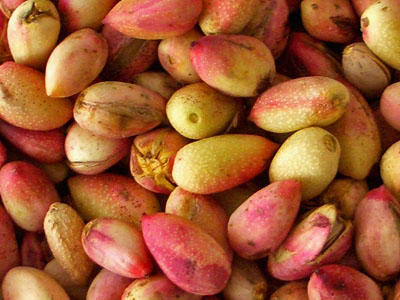
Fresh pistachios in Iran

Fresh pistachios in Iran


Pistachios in Iran

Iranian pistachios are famous all over the world. Here, when in season, they are also eaten fresh. A fleshy skin protects the familiar shell, keeping the kernel inside moist. Milky tasting and unsalted, they are somewhat reminiscent of soybeans or chickpeas.

© Iranvisitor.com