Tourist & Resident Guide to Iran
Showing posts with label Festival. Show all posts

Tuesday, April 04, 2006

Noruz Table

Noruz Table


A traditional Noruz table (Sofreh haft-seen) consists of seven kinds of food, each beginning with the letter S or sin in Farsi, which represent the virtues of abundance, health, life, love, patience, purity and wealth.
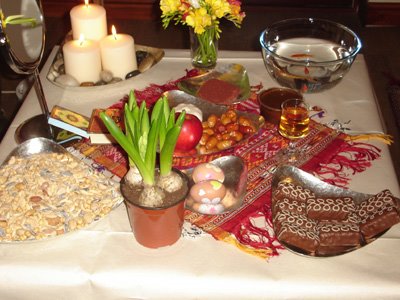
Noruz table

Sabzeh - wheat or lentil sprouts symbolizing rebirth.
Samanu - a creamy wheat germ pudding with sacred connotations.
Seeb - apples represent beauty and good health.
Senjid - dried fruit of the lotus tree symbolizing love.
Serkeh - vinegar represents longevity and the virtue of patience.
Sir - garlic symbolizes good health due to its medicinal properties.
Somagh - sumac berries symbolize the brightness of the sun and the ultimate victory of good over evil.

Noruz table

Flowers such as hyacinths Sonbol and tulips Laleh can also be placed on the Noruz table and represent Spring.
Painted eggs are symbols of fertility.
The mirror represents the life reflected, candles reveal happiness and goldfish symbolize life and energy.

Images kindly provided by Mohammed, an Iranian Msc student at Metropolitan University, London

Iranian food

© Iranvisitor.com

Sunday, October 16, 2005

Ramezan

Ramezan


We are currently well into the holy month of Ramadan or Ramezan as it is known in Iran. During this month it is forbidden to eat during the daylight hours and charitable donations must be made in the place of meals that would have been eaten. It is common for people to wake before dawn to eat sahar but the more devout will eat only once a day at eftar after the sun goes down.

Ramadan or Ramezan as it is known in Iran.


Unlike fasts for health such as those popular in the Ayurvedic tradition, fasting Moslems are not able to drink water. Other ways in which one’s fast is broken include receiving an intravenous drip, submerging oneself in water and smelling particularly strong odours.

Many Iranians consider Ramezan as a chance to lose weight but the large compensatory meals eaten after sundown often put paid to that. During this month, eating and drinking in public places is forbidden though clandestine meals behind closed doors, at less conservatively-minded workplaces for example, are commonly eaten.

Ramadan in Qatar